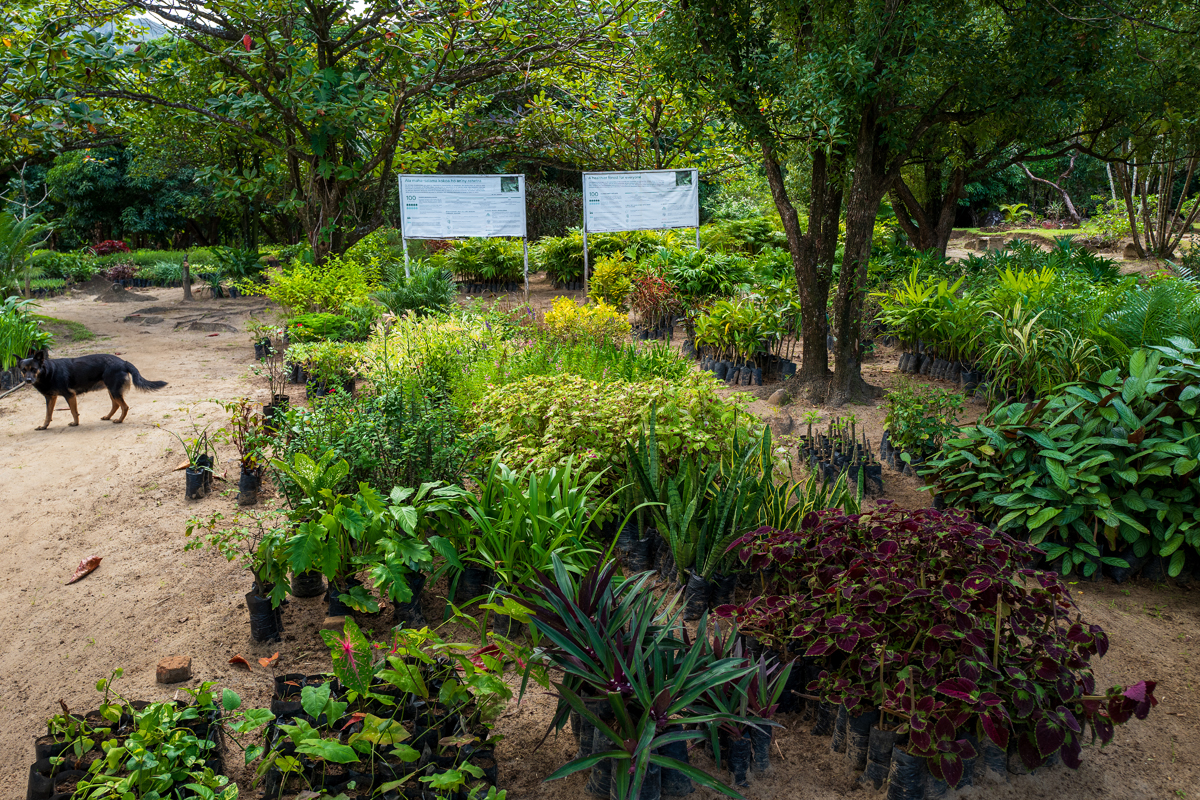
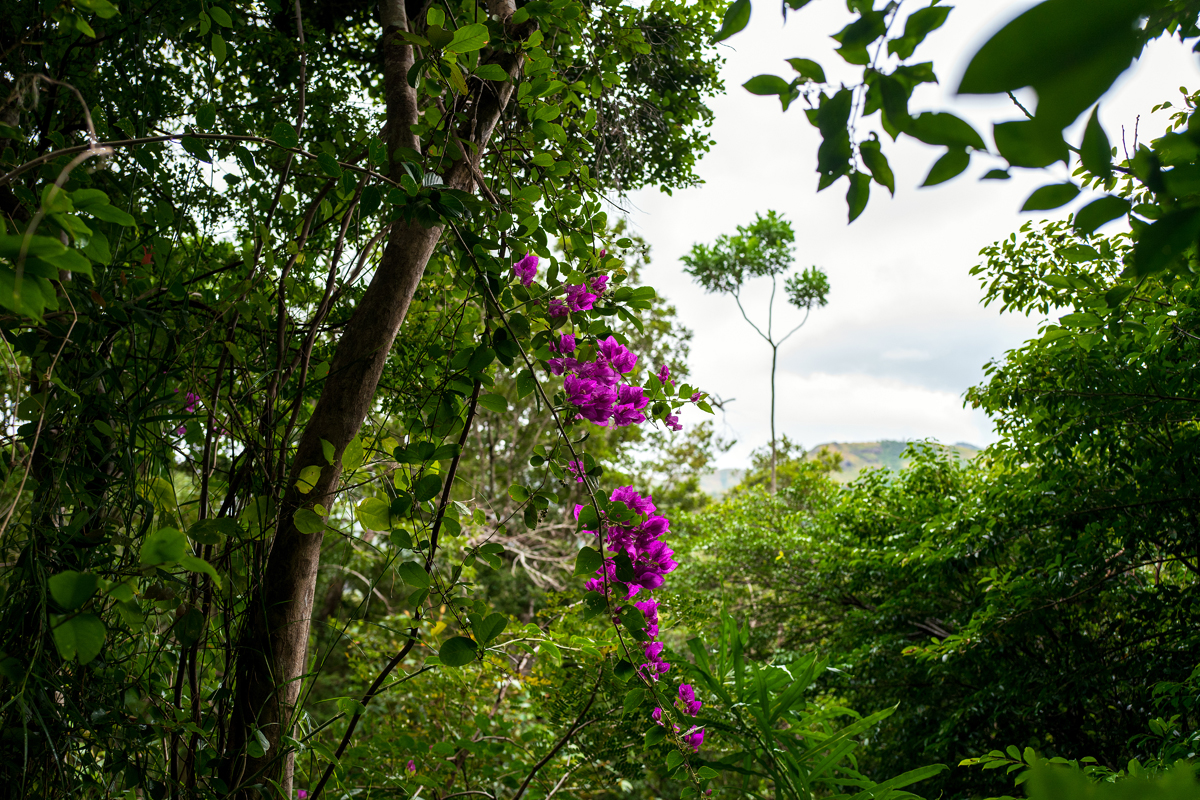
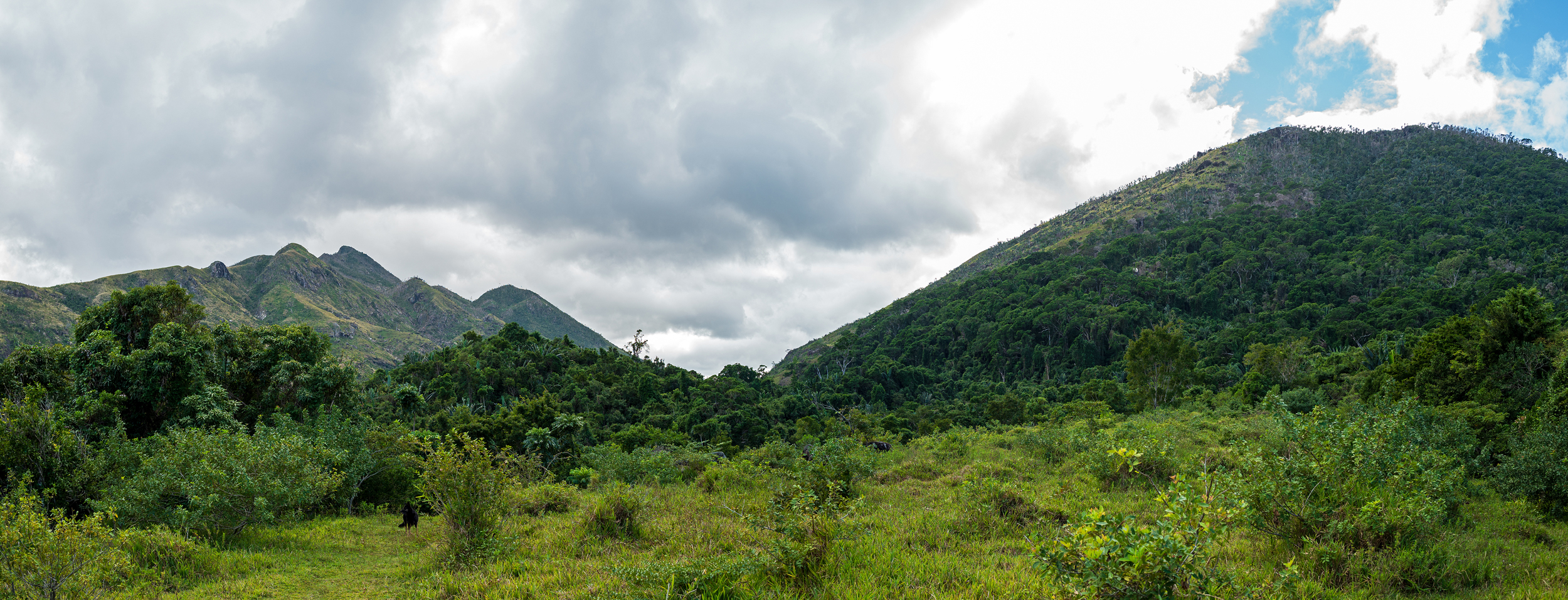
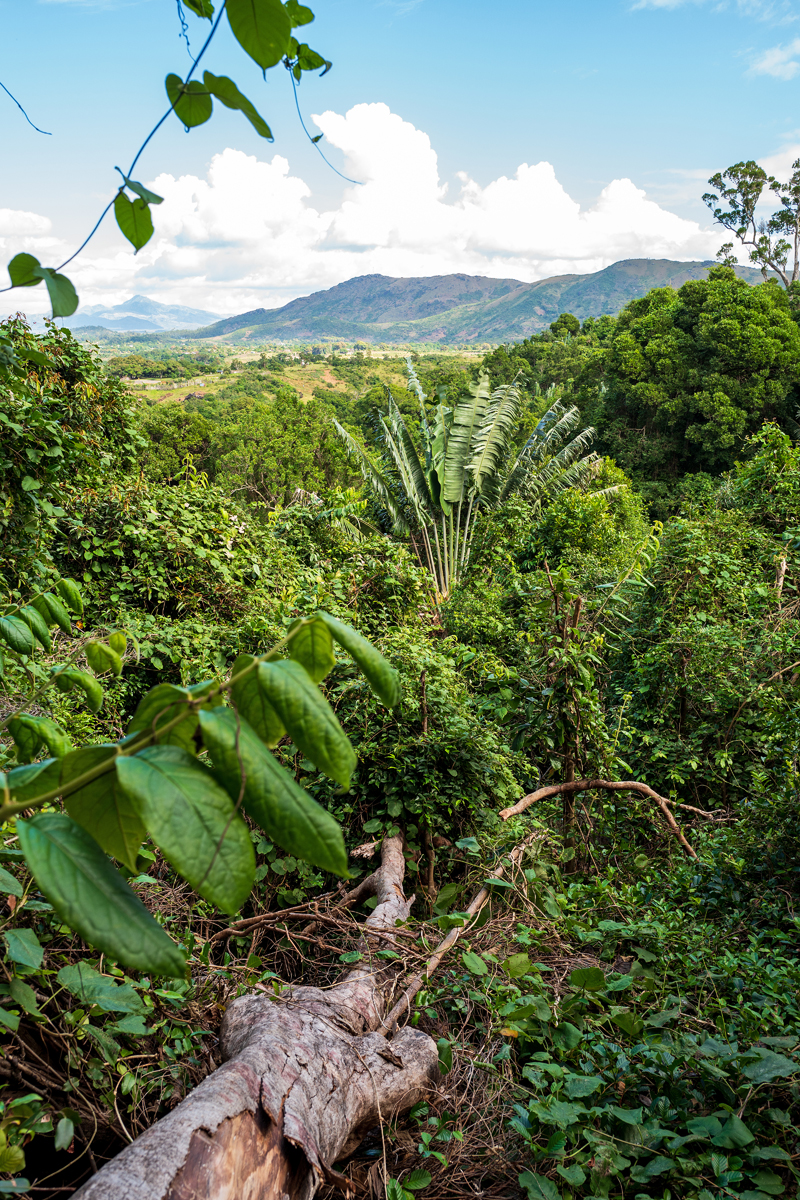
Over the course of the last 20 years, 136 hectares of land have been protected nine kilometres west of Tolagnaro at the Domaine de la Cascade. In the vicinity of the last lowland primary forest of the great south, the goal at the Domaine is to protect the natural environment, enhance the area through reforestation and passing the natural heritage to the next generations through education. In addition, tourism contributes to the financing of it all. For that purpose, 17 km of paths have been laid out, and because of the guide dog Martha, the owner´s German shepherd, it is possible to walk alone, to get lost in the forest and to find the way back home again.
Neun Kilometer westlich von Tolagnaro werden in der Domaine de la Cascade seit 20 Jahren 136 Hektar Land geschützt. In direkter Nachbarschaft zum letzten Tiefland-Primärwald im Süden Madagaskars ist das Ziel, die einzigartige Natur zu schützen und zu bewahren, die Biodiversität durch Wiederaufforstung zu vergrößern und das natürliche Erbe durch Bildung an die nächsten Generationen weiterzugeben. Zur Finanzierung des Ganzen trägt der Tourismus bei, weshalb es insgesamt 17 Kilometer an Wegen gibt, die man auch allein erkunden kann, weil Hunde-Guide Martha, der deutsche Schäferhund der Besitzer, einen automatisch begleitet und dafür sorgt, dass man sich ohne Bedenken im Wald verlaufen und trotzdem wieder zurückfinden kann, denn Martha kennt den Weg.
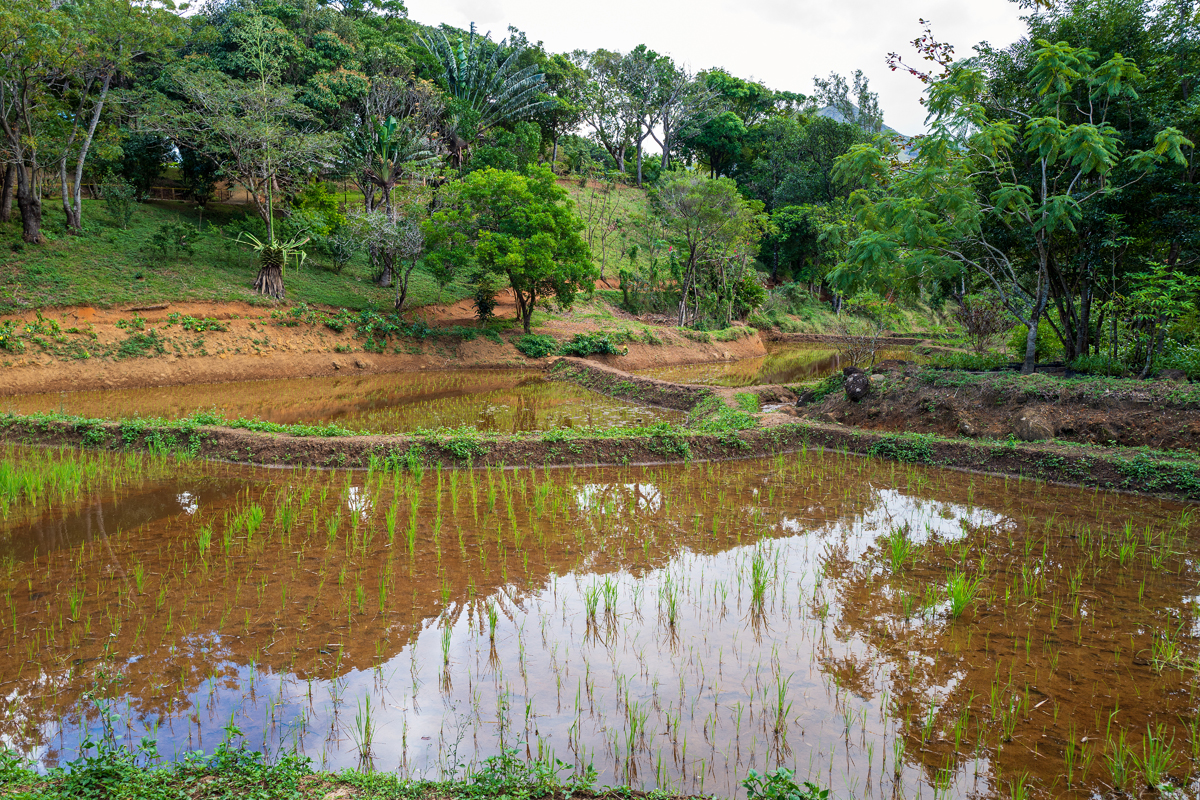


Besides medicinal plants, they produce pink peppercorns, wild pepper, vanilla, rice, coffee, honey as well as fruits like lychees, pineapples, passion fruits, oranges, lemons and grapefruits. Dozens of locals are working there, and during harvesting time, even more are hired. Furthermore, they are allowed to access the estate and cultivate rice like they have always done while the owners are engaged in the organization of sports tournaments and concerts. Guards are constantly having an eye on illegal logging and poaching, so that this important water reservoir that supplies the local communities is being effectively protected.
Neben medizinischen Pflanzen werden in der Domaine Rosa Pfeffer (baie rose), wilder Pfeffer, Vanille, Reis, Kaffee, Honig sowie Früchte wie Litschis, Ananas, Passionsfrüchte, Orangen, Zitronen und Grapefruits produziert. Dutzende Einheimische haben Arbeit in der Domaine gefunden, und zur Erntezeit werden noch viel mehr angeheuert. Darüber hinaus ist es den Einheimischen nach wie vor erlaubt, auf dem Grundstück Reis anzubauen – wie sie es seit langer Zeit tun. Die Besitzer dagegen engagieren sich in der Organisation von Sportveranstaltungen und Konzerten. Wachpersonal ist währenddessen permanent damit beschäftigt, ein Auge auf illegale Abholzung und Wilderei zu haben, um dieses wichtige Wasserreservoir, das die Gemeinden mit Trinkwasser für Menschen und Tiere versorgt, effektiv zu schützen.

 docugrAfrica
Ein positiver schöner Post, für ein lobenswertes Projekt.
LikeGefällt 1 Person